The global healthy snack market continues to expand as consumers increasingly seek products made with natural ingredients that offer both nutritional value and distinctive flavors. Within this trend, freeze-dried durian has emerged as a premium fruit snack category with growing international demand.
For importers, distributors, and food brands, however, sourcing freeze-dried durian from Vietnam involves more than comparing prices. Raw material quality, processing technology, food safety compliance, and export capabilities all play a critical role in determining long-term supply reliability and product performance in the market.
This article outlines several key factors international buyers should evaluate when selecting a freeze-dried durian supplier in Vietnam.
Understanding the Advantages of Freeze-Drying Technology
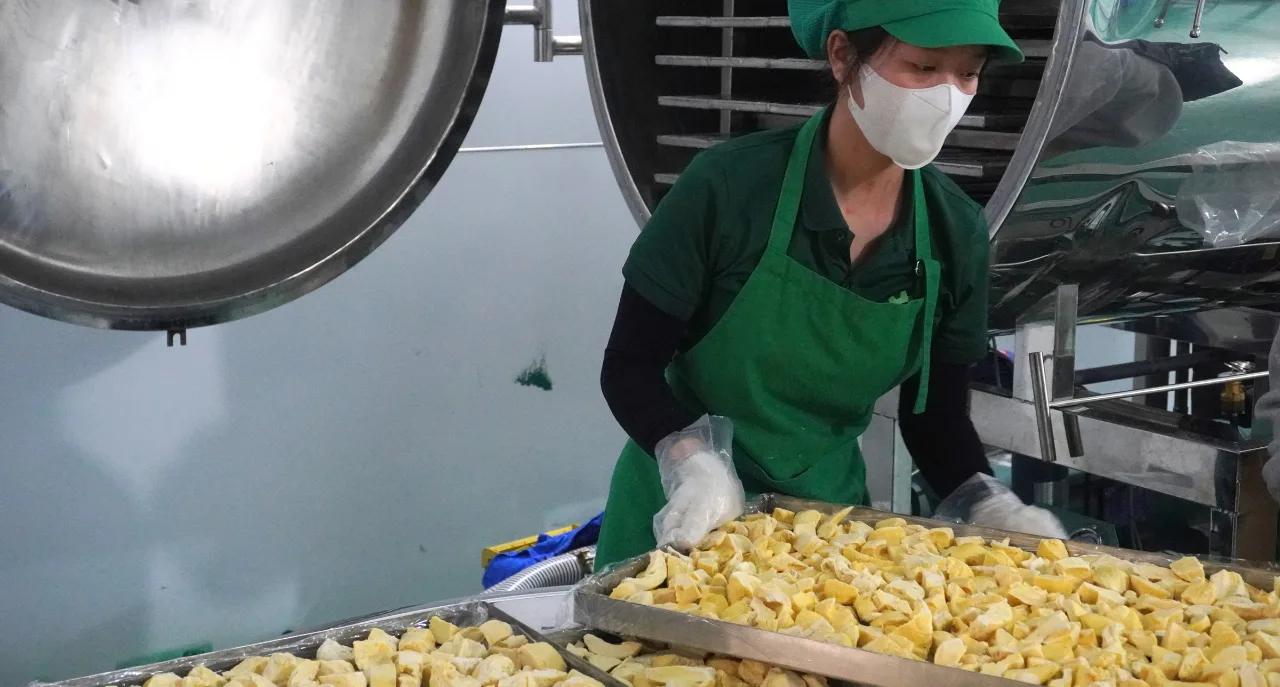
The quality of freeze-dried durian is largely influenced by the processing technology used. Unlike conventional hot-air drying methods, freeze-drying removes moisture through sublimation, where frozen water is converted directly into vapor under vacuum conditions without passing through the liquid phase.
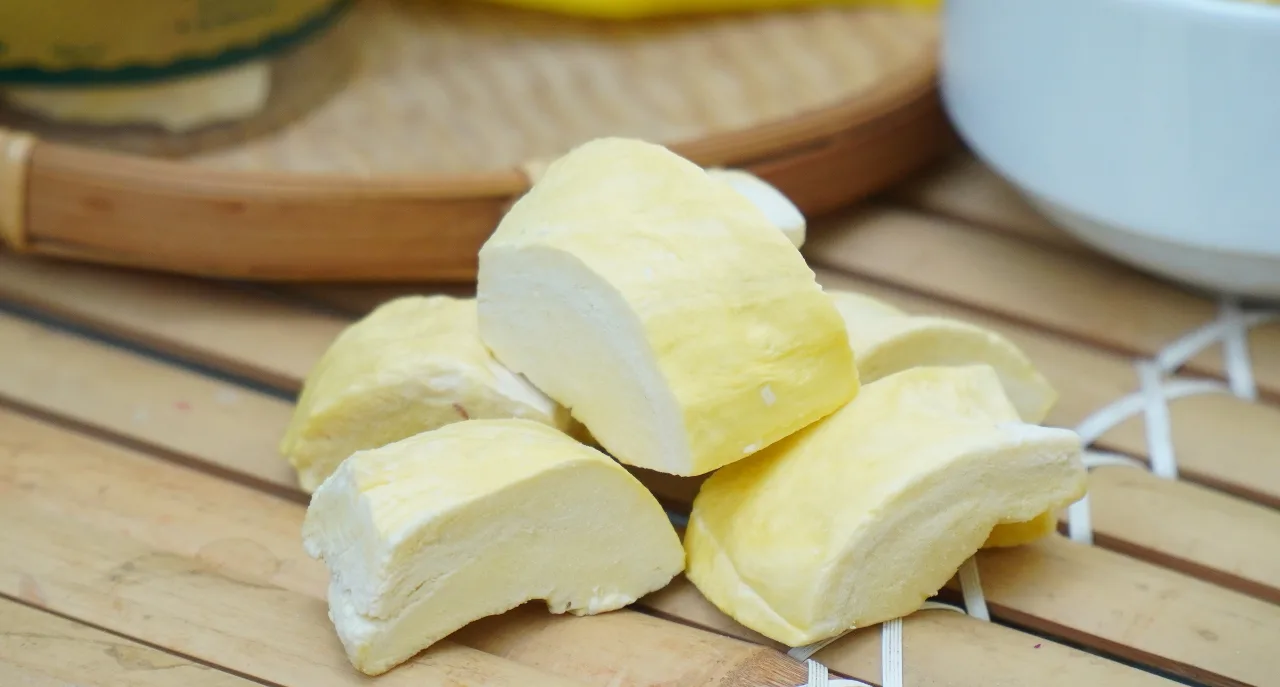
This process helps preserve the fruit’s cellular structure, allowing the final product to retain its natural appearance, crisp texture, and characteristic flavor profile. In addition, much of the original nutritional value can be maintained compared to traditional drying techniques.
A typical freeze-drying process consists of rapid freezing, primary drying under vacuum, and secondary drying to remove residual moisture. The result is a shelf-stable product with low moisture content and an extended shelf life, often without the need for preservatives.
Why Raw Material Selection Matters
Processing technology alone cannot guarantee product quality. The characteristics of the fresh durian used as input significantly affect the final freeze-dried product. Vietnam’s Central Highlands region has become one of the country’s most important durian-growing areas. The region benefits from fertile basalt soil, favorable climate conditions, and increasing adoption of modern agricultural practices.
Popular varieties such as Ri6 and Monthong are widely used in freeze-dried applications due to their thick flesh, rich flavor, attractive golden color, and firm texture. These attributes help maintain product integrity throughout the freeze-drying process while reducing breakage during handling and transportation.
For international buyers, sourcing from suppliers that work with managed farming areas and traceable raw material systems can also provide additional assurance regarding consistency and food safety compliance.
Evaluating Food Safety and Compliance Standards
Food safety compliance remains one of the most critical considerations when importing freeze-dried fruit products.
A reliable supplier should operate under internationally recognized food safety management systems such as HACCP and ISO 22000. These frameworks help identify, monitor, and control potential biological, chemical, and physical hazards throughout the production process.
Buyers should also verify the availability of supporting documentation, including:
- Certificate of Analysis (COA)
- Microbiological testing reports
- Product specifications
- Traceability records
- Export documentation required by destination markets
For regulated markets such as the United States, European Union, Japan, and South Korea, suppliers should also demonstrate familiarity with applicable import regulations, labeling requirements, and facility registration obligations where necessary.
Packaging and Logistics Considerations
Freeze-dried durian is highly sensitive to moisture absorption after processing. As a result, packaging plays a crucial role in maintaining product quality throughout international distribution.
Most export-grade products are packed in multi-layer aluminum foil packaging designed to provide strong moisture and oxygen barriers. Depending on the business model, suppliers may also offer customized packaging solutions for retail, foodservice, or private-label programs.
Beyond packaging, buyers should evaluate a supplier’s ability to support different shipment volumes, ranging from trial orders and market testing programs to full-container commercial shipments. Flexible logistics capabilities can be particularly important during product launch and market expansion phases.
Conclusion
Vietnam has become an increasingly attractive sourcing destination for freeze-dried durian thanks to its expanding durian cultivation areas, improving processing capabilities, and growing export experience.
However, successful sourcing decisions should be based on a comprehensive assessment rather than price alone. International buyers are encouraged to evaluate raw material quality, freeze-drying expertise, food safety systems, traceability practices, packaging solutions, and export capabilities before selecting a long-term supply partner. A supplier that can consistently manage these factors is more likely to support stable supply chains, regulatory compliance, and sustainable brand growth in international markets.
FPT AdTrue Export May 2026 | Written by Lucas Tran