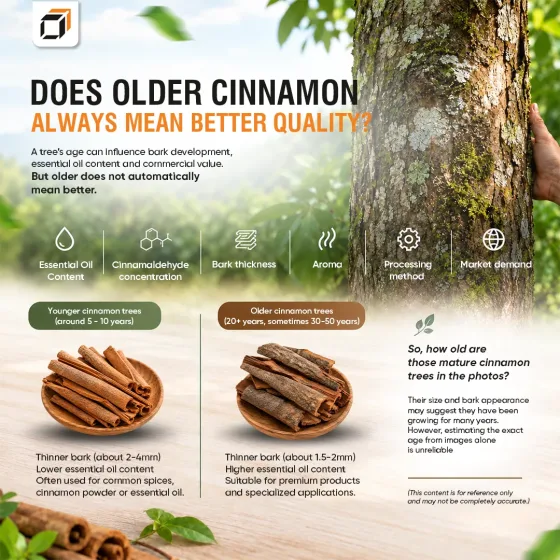
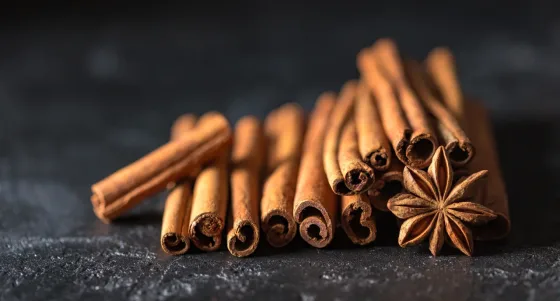
Ask ten buyers what “cinnamon” means, and you might get ten different answers, and that is part of the problem. In international trade, “cinnamon” is an umbrella term covering several distinct species, each with its own chemical composition, flavor intensity, and regulatory requirements. For food manufacturers and spice distributors buying at volume, this distinction is not only theoretical; it directly affects dosage, cost per production batch, and how the finished product performs on the shelf.
Understanding the differences between Vietnamese cassia varieties helps international importers avoid costly sourcing mistakes. Choosing the wrong type can affect product formulations, disrupt production schedules, create unnecessary logistics costs through replacement or urgent shipments, and could ultimately reduce the profitability of the entire order.
Vietnamese Cassia and Other Cinnamon Varieties on the Market
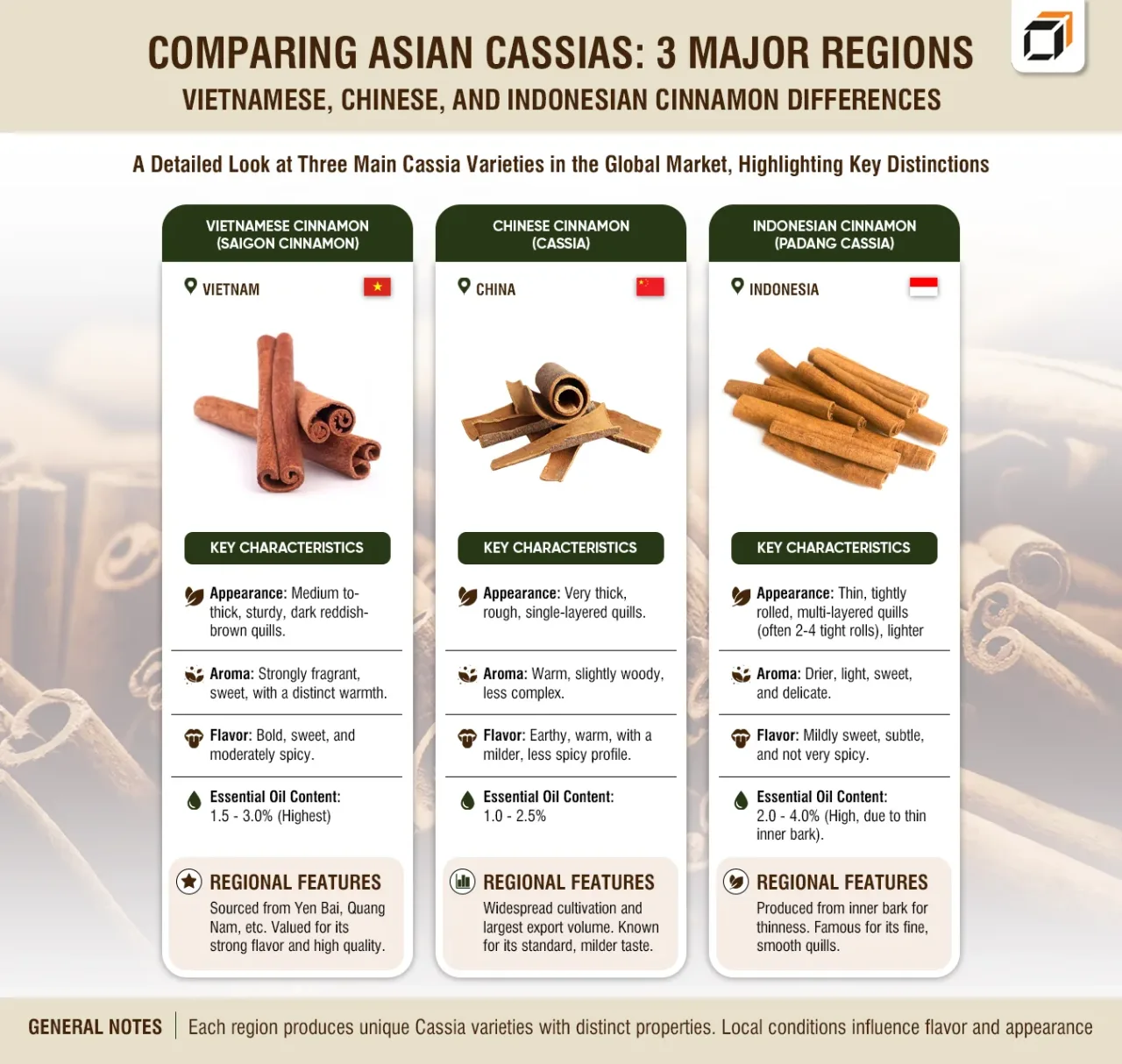
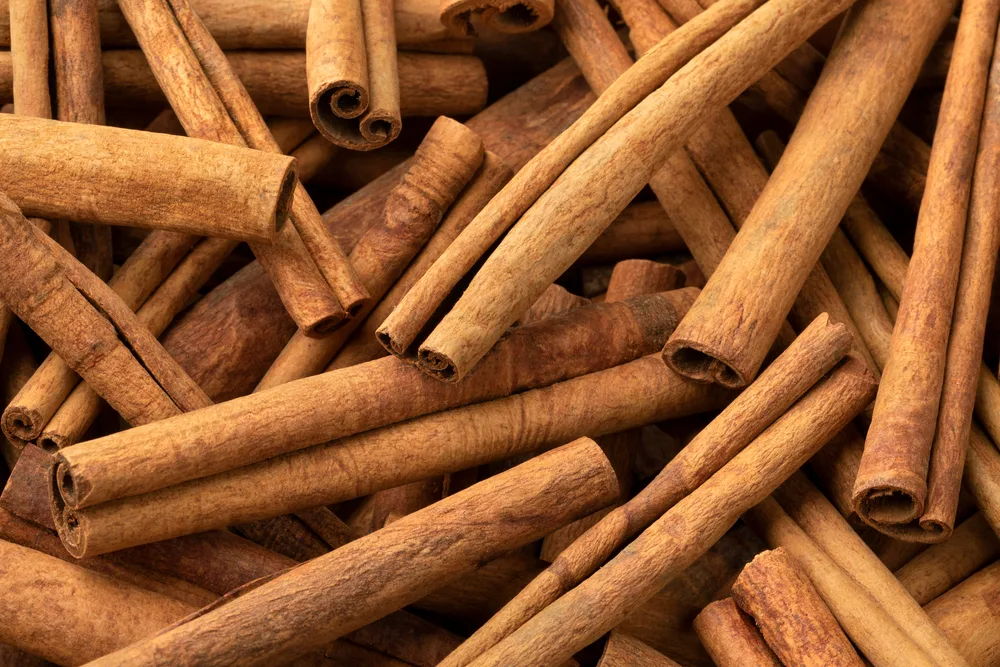
Commercially, cinnamon traded internationally comes from four main species under the genus Cinnamomum: Ceylon cinnamon (C. verum), grown mainly in Sri Lanka and often called “true cinnamon”; Chinese cassia (C. cassia), the variety most widely traded in bulk markets; Indonesian cassia (C. burmannii), known for its thin, tightly curled quills; and Vietnamese cassia (C. loureiroi), also known internationally as Saigon cinnamon.
Vietnamese cassia is not a regional grade of Chinese cassia. It is a completely separate species, native to the mountainous regions of northern and central Vietnam. This botanical distinction is the root of most of the practical advantages that buyers receive.
Why Vietnamese Cassia Has a Stronger Flavor
What spice labs and buyers consistently report about Vietnamese cassia is its intensity. This variety contains a significantly higher concentration of essential oil and cinnamaldehyde (a compound responsible for cinnamon’s characteristic heat and aroma) than Chinese cassia or Indonesian cassia. In practical terms, food manufacturers can often achieve the same flavor intensity with less Vietnamese cassia. This improves ingredient efficiency while lowering production costs at scale.
This is also why Vietnamese cassia commands a higher price on international markets: buyers are paying for concentration, not just for the bark itself.
The Role of Terroir and Climate
Vietnam’s best-known cassia growing regions, Yên Bái and Lào Cai in the north, and Trà My district in Quảng Nam province in central Vietnam, share the same characteristics of mountainous terrain and tropical monsoon climate, and this condition appears to contribute to concentrating essential oil in the bark. Harvest timing also creates a difference. Bark harvested in spring peels more easily, yielding larger, intact, visually clean pieces suited to premium cinnamon sticks or retail packaging, while bark harvested in autumn usually carries the highest oil concentration, which processors prefer for making powder or extracts.
With this knowledge, buyers can schedule purchases around the harvest season that best suits their intended application, rather than relying on whatever inventory is currently available.
The Coumarin Question
Like all cassia varieties, Vietnamese cassia contains coumarin, a natural compound that the EU controls in food products due to concerns about liver effects at high intake levels. This is something any buyer shipping into the EU market needs to keep in mind, since maximum coumarin thresholds apply to certain product categories.
Coumarin content varies by tree, growing region, and even by individual batch, so the correct approach is not to rely on general claims that one origin is “lower” than another, but to request a Certificate of Analysis for the specific lot being shipped. If an exporter is not willing to provide batch-specific lab data for coumarin and other compliance parameters, that is a signal worth paying attention to before signing a contract.
What This Means When You Are Sourcing
For a procurement or QA manager evaluating suppliers, there are three checks worth building into the due diligence process: confirm exactly which species within the genus Cinnamomum is actually being quoted, since listings that simply say “cinnamon” or “cassia” can confuse; request essential oil and coumarin figures tied to the specific batch rather than a general product description; and choose the right type of cassia to match the intended use, cassia powder and broken cassia for industrial processing, split cassia and cinnamon sticks for retail facing products.
Understanding these differences is the first step. The next step is understanding which cassia grades best suit your application. That’s exactly what we’ll cover in our next article.
FPT AdTrue Export Aug 2026 | Written by Lucas Tran