Vietnam is one of the world’s leading nations in cashew processing and exporting. Vietnamese cashews are present in over 90 countries and territories, serving diverse demands ranging from direct consumption to food processing. However, not all cashews processed and exported originate from domestic farms. In reality, cashew cultivation is concentrated primarily in the Southern region—particularly the Southeast and the Central Highlands—while processing plants also rely on significant volumes of imported raw cashew nuts (RCN) to meet production requirements.
This article helps importers and processing enterprises better understand Vietnam’s primary cashew-growing regions, regional production characteristics, and raw material supply capacity. As a result, buyers can better evaluate supply sources and choose regions that align with their quality, volume, and procurement strategy requirements.
1. Where Are Cashews Grown in Vietnam?
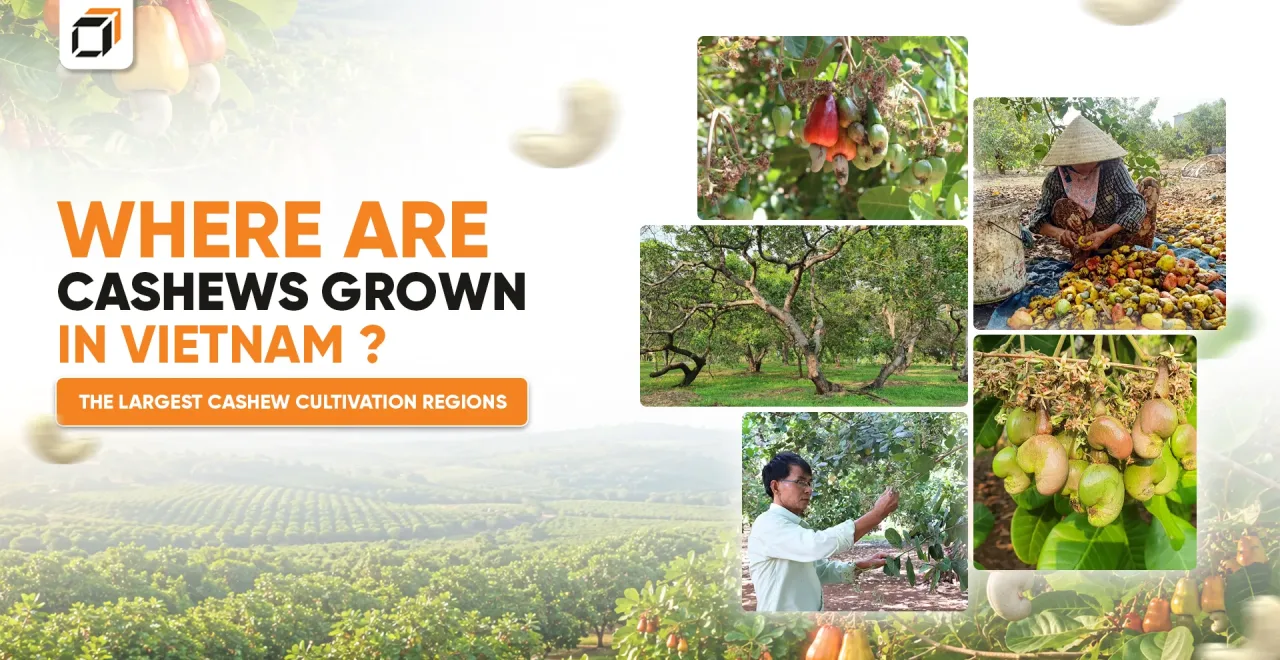
The cashew tree (Anacardium occidentale) is a perennial industrial crop originating from the tropical regions of South America. In Vietnam, cashews are cultivated primarily in the southern provinces, where temperatures remain relatively high year-round and distinct dry seasons prevail. The largest cultivation areas are concentrated in the Southeast and the Central Highlands. Cashews are also grown in select provinces along the South Central Coast; however, cultivation scale and production conditions vary significantly across locations.
According to data from the Ministry of Agriculture and Rural Development, Vietnam’s total cashew area is estimated at approximately 314,000 hectares, with harvestable areas reaching around 300,000 hectares and producing over 345,000 metric tons of raw cashew nuts. Among the growing regions, the Southeast holds the largest share, accounting for over 192,000 hectares—roughly 61% of the national total. The Central Highlands serve as the second most vital production hub, contributing significantly to domestic sourcing and processing facilities.
2. The Southeast: Vietnam’s Largest Cashew Region
The Southeast is Vietnam’s main cashew-growing region, with Binh Phuoc widely known as the country’s “cashew capital.” Cashew trees are also grown in Dong Nai, Binh Duong, Tay Ninh, and nearby areas. The region has favorable conditions for cashew cultivation, with warm temperatures throughout the year and distinct rainy and dry seasons. Its long history of cashew farming and large cultivation areas make the Southeast an important source of raw cashew nuts for processing factories across Vietnam.
Binh Phuoc: The Cashew Capital of Vietnam
Binh Phuoc is Vietnam’s most famous cashew region, universally acknowledged as the national cashew capital. Cashew trees have long been deeply rooted in the agricultural economy and livelihoods of local farmers. Key cultivation districts include Bu Dang, Bu Gia Map, Phu Rieng, Dong Phu, and neighboring areas, with Bu Dang standing out for its prominent acreage and yields.
A primary advantage of the Binh Phuoc cashew region lies in its favorable soil conditions—particularly basaltic red and red-yellow soils—combined with a tropical monsoon climate. High year-round temperatures and a dry harvest period foster optimal conditions for flowering, fruit set, and nut development. These natural factors have built the strong reputation of Binh Phuoc cashews in the market. Notably, the region has been granted a Geographical Indication (GI) for Binh Phuoc cashew products, affirming the origin and prestige of this local agricultural commodity.
According to the 2024 Binh Phuoc Statistical Yearbook, the province’s total cashew area reached approximately 148,239 hectares, with a harvested area of about 145,043 hectares. Raw cashew nut production totaled around 155,053 metric tons—a decrease from the 195,257 metric tons recorded in 2023, despite minimal changes in total acreage. This underscores that annual output depends not only on land area but also heavily on weather patterns, flowering and fruit-setting success, and seasonal yields. It is worth noting that following administrative realignments on July 1, 2025, Binh Phuoc merged into the expanded Dong Nai province; however, the name “Binh Phuoc” remains widely used when referring to this traditional raw material zone and brand.
Dong Nai and Neighboring Areas
Dong Nai is another major cashew-growing and processing area in Vietnam. Cashew farms are mainly found in the northern and eastern parts of the province, where soil and climate conditions are suitable for growing cashew trees. Since Binh Phuoc was merged into Dong Nai in 2025, the province has included a much larger cashew-growing area. However, most of this area is located in what was formerly Binh Phuoc, which has a long history of cashew cultivation. The presence of growing areas, processing factories, and trading businesses makes this part of Vietnam an important source of cashew nuts for the domestic processing industry.
Cashew trees have also been grown in parts of Tay Ninh and Binh Duong, although the scale of cultivation differs from one area to another. In some places, farmers have switched to other crops depending on profitability, market prices, and the cost of maintaining cashew farms. For this reason, Binh Phuoc remains the best-known name when discussing Vietnam’s major cashew-growing areas, particularly in terms of cultivation scale and industry reputation.
3. The Central Highlands: A Vital Sourcing Hub
The Central Highlands ranks as Vietnam’s second-largest cashew cultivation region, featuring traditional growing areas across Dak Lak, Dak Nong, Gia Lai, Kon Tum, and Lam Dong. Cashew orchards are situated on relatively flat terrain characterized by basaltic red soils or gray soils favorable for perennial crops. Compared to crops like coffee and pepper, cashews demonstrate higher tolerance to less fertile soils and can thrive in regions with pronounced dry periods. This resilience makes cashews a strategic crop choice across several areas in the Central Highlands.
Dak Lak and Dak Nong are noteworthy cashew producers within the region. Cashews grown in districts with suitable soil conditions provide supplementary income for farming households alongside other industrial crops. Gia Lai and Kon Tum also maintain dedicated cashew acreage, though yields and scale differ by locale. Overall, the Central Highlands serves as an essential secondary source of domestic raw nuts while driving region-specific agricultural development.
However, growing conditions in the Central Highlands differ from those in the Southeast. Higher elevations and lower temperatures mean morning fog or extended dry spells can occur during the blooming phase. Unfavorable weather during flowering and fruit setting can significantly impact yields. Therefore, selecting resilient cultivars, managing irrigation, and applying precise seasonal care are critical to optimizing production in this region.
4. The South Central Coast: A Region with Distinct Growing Conditions
Beyond the Southeast and Central Highlands, cashews are also grown in some provinces along Vietnam’s South Central Coast, including Binh Dinh, Phu Yen, Khanh Hoa, Ninh Thuan, and Quang Ngai. This region has a tropical climate, with relatively low rainfall and long dry periods in some areas. Cashew trees can tolerate dry conditions and grow in soils that are less suitable for many other crops. However, differences in soil conditions and rainfall affect both cultivation areas and yields across the region.
Cashew farming in the South Central Coast is generally smaller in scale than in the Southeast. Production also varies depending on local soil and weather conditions. Poor soil, sloping land, and irregular rainfall can make it difficult for farmers to maintain stable yields. In particular, unexpected rain during the flowering and fruit-setting stages can affect pollination and fruit development. Choosing suitable growing areas and applying appropriate farming practices are therefore important for maintaining healthy cashew trees and consistent production.
5. Ideal Natural Conditions for Cashew Cultivation in Vietnam
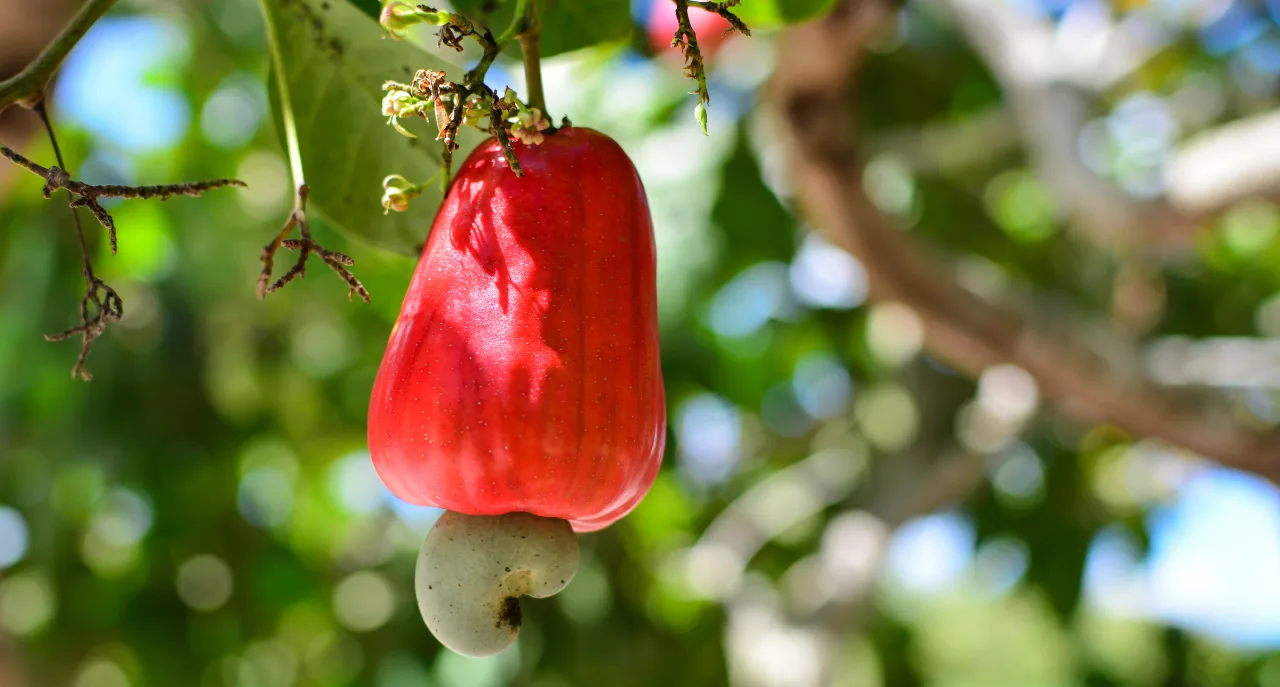
The cashew tree is a tropical species that thrives in warm climates and adapts well to diverse soil types. An average temperature of around 27°C (80°F) is considered ideal for optimal growth. Cashews can develop in red basalt soils, gray soils, and low-fertility land, provided the soil offers good drainage and remains free from prolonged waterlogging. Nevertheless, deep, well-drained, porous soils with moderate moisture retention provide the best environment for healthy development and stable yields.
A distinct division between wet and dry seasons is vital for cashew production. While trees require sufficient water during their vegetative growth phase, dry and clear weather is critical during flowering and fruit setting. Heavy rains or prolonged high humidity during bloom can cause flower drop, interfere with pollination, and lower fruit-setting rates. Conversely, severe drought while the nuts are developing can reduce kernel size and quality. Thus, regions with reliable dry seasons hold a distinct competitive edge in commercial cashew production.
Topography and elevation also affect the suitability of an area for cashew cultivation. Cashew trees generally grow well in low- to medium-elevation areas with gentle slopes and well-drained soil. Areas that experience frequent fog, cold weather, or unexpected rain during the flowering season may have lower yields. In the Southeast, favorable growing conditions, large cultivation areas, and long-standing farming experience have helped the region remain Vietnam’s leading cashew-growing area.
6. Popular Cashew Cultivars Grown in Vietnam
Cultivar selection directly impacts the yield and quality of raw cashew nuts. Historically, many Vietnamese farms relied on seedling trees propagated directly from seeds. While simple, this method led to high variability in growth habits, nut size, kernel turnout ratio, and overall yield. In recent years, selecting high-performing clones and adopting vegetative propagation (grafting) have gained widespread adoption to improve orchard uniformity and economic efficiency.
Key cashew cultivars researched, selected, and deployed in Vietnam include PN1, AB29, AB05-08, alongside other promising elite lines. These varieties are evaluated based on growth vigor, yield potential, nut size, kernel turnout, and regional adaptability. However, actual field performance still depends on soil conditions, local climate, tree age, and management practices. As a result, no single cultivar fits every growing region across Vietnam.
In addition to choosing superior varieties, proper propagation and orchard management strongly influence raw material quality. Grafted cashew trees are widely used to preserve desirable mother-tree traits while ensuring consistent orchard growth and fruit-bearing. Rejuvenating aging orchards, replacing low-yielding trees, and applying standardized agronomy represent key strategies for elevating raw material supply. These practices are essential for driving long-term enhancements in the yield and quality of Vietnamese raw cashew nuts.
7. The Cashew Harvest Season in Vietnam
The cashew harvest season in Vietnam typically begins around January or February and extends through May, depending on the growing region, cultivar, and prevailing weather conditions of the year. In the Southeast—most notably in traditional Binh Phuoc growing zones—peak harvesting occurs between February and April, with March serving as the main harvest month. Harvest schedules in parts of the Central Highlands and South Central Coast may shift slightly due to variations in microclimates and flowering times.
During harvest, cashew apples mature and naturally fall to the ground when fully ripe. Farmers collect the fallen fruit, manually separate the raw nut from the cashew apple, and sun-dry the nuts to reduce moisture content before storage or sale to local traders. Proper post-harvest drying is essential to prevent mold growth, insect damage, and quality degradation during storage. Timely harvesting and appropriate post-harvest handling ensure that raw material quality is preserved before entering processing plants.