Vietnam plays a leading role in the global cashew processing and export industry, supplying cashew kernels to markets worldwide. Producing kernels that meet international quality standards requires careful control at every stage, from preparing raw material and shelling to grading and packaging. Each step affects the final product’s size, color, moisture content, whole-kernel ratio, and overall consistency. Poor handling at any stage can result in more broken kernels, inconsistent quality, and reduced shelf life.
The following are eight key stages commonly involved in cashew kernel processing in Vietnam. While specific methods and equipment may vary between processing facilities, each stage plays an important role in determining the quality of the finished kernels.
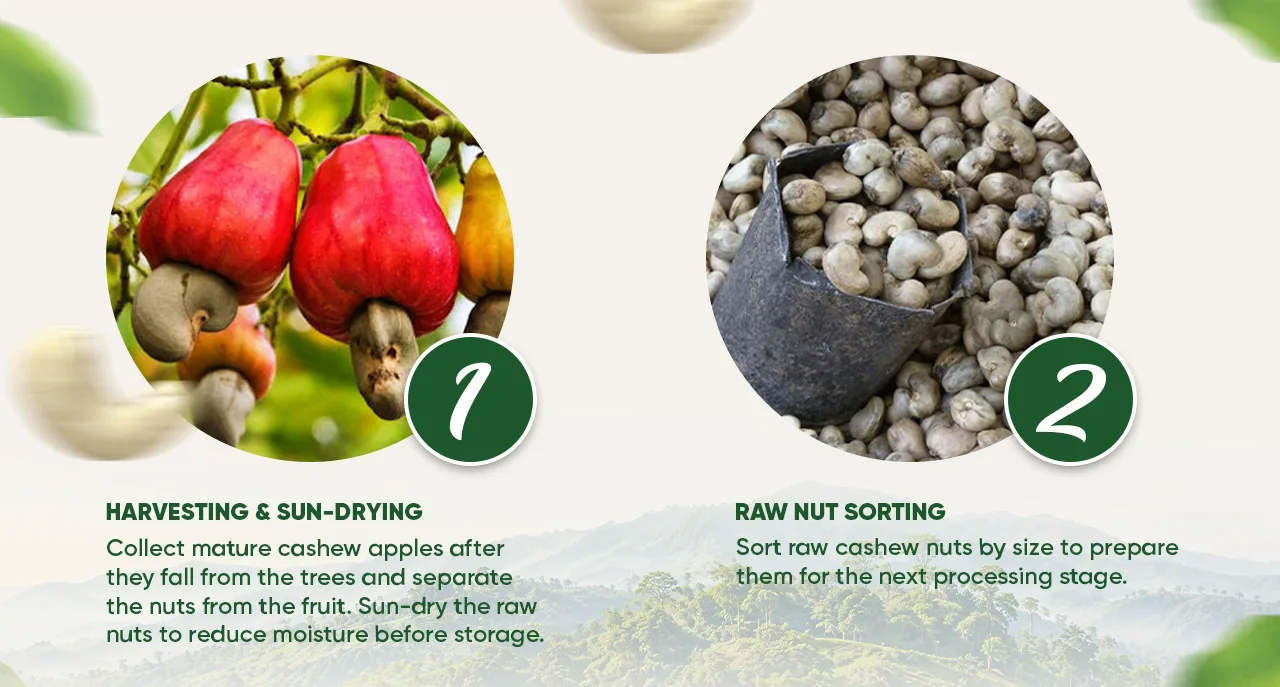
1. Harvesting and Drying Raw Cashew Nuts
Cashew processing begins with harvesting ripe cashew apples. Before harvesting, the ground beneath the trees is usually cleared of weeds to make it easier to collect the fallen fruit. Once collected, the nuts are separated from the cashew apples and spread out to dry. Sun drying reduces the moisture content of raw cashew nuts (RCN), helping prevent quality deterioration during storage before processing. Drying time varies depending on weather conditions and the initial moisture content of the nuts. Once dried to the required level, the nuts are stored under suitable conditions to prevent moisture absorption and contamination.
2. Sorting Raw Cashew Nuts by Size
Before processing, raw cashew nuts are sorted by size to ensure they can be handled properly in the following stages. Nuts of different sizes may require different steaming conditions and shelling methods. Sorting helps processors handle each batch more effectively, reducing the risk of kernel breakage and damage during processing. It also helps identify nuts that do not meet the required specifications before they move on to the next stage. This step helps improve the consistency of the overall processing operation.
3. Steaming Cashew Nuts
After sorting, raw cashew nuts undergo steam treatment to prepare them for shelling. Heat and steam help soften the outer shell, making it easier to cut and remove without damaging the kernel inside. Steaming conditions must be adjusted to suit the characteristics of the raw nuts, as well as the equipment and processing methods used at each facility. Inadequate treatment can make shelling more difficult and increase the risk of kernel damage. Cashew nut shells also contain cashew nut shell liquid (CNSL), which can irritate the skin and eyes. For this reason, workers must follow appropriate safety procedures when handling raw nuts during steaming and subsequent processing. Proper steam treatment helps prepare the nuts for shell removal while minimizing damage to the kernels.
4. Cutting and Shelling
After steaming, the hard shells are removed to separate the cashew kernels. This step can be carried out manually or with shelling machines, depending on the processing facility. The key is to remove the shells without breaking or damaging the kernels. Improper shelling can result in broken or chipped kernels, reducing their commercial value. The percentage of whole kernels obtained at this stage also determines the proportion of whole and broken kernel grades in the final product. Careful shelling helps maintain a higher whole-kernel yield and reduces product losses.
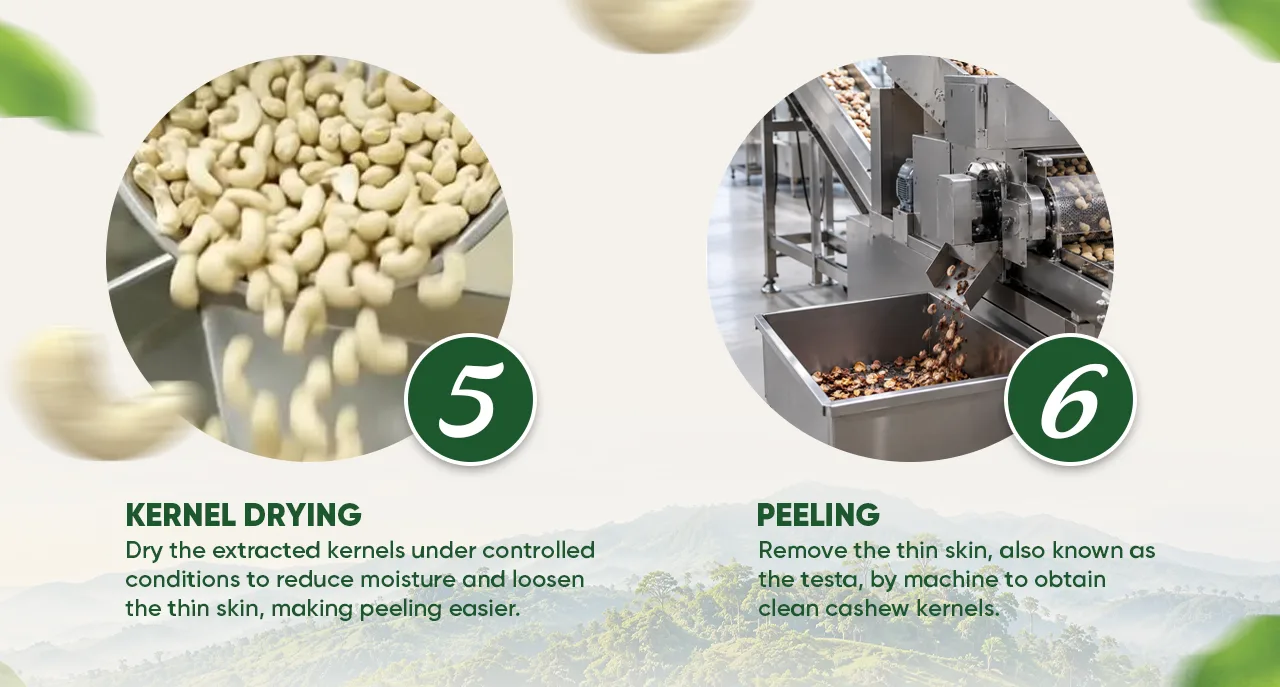
5. Drying Cashew Kernels
After shelling, the kernels are dried to reduce their moisture content and loosen the thin skin surrounding them, known as the testa. This makes the next peeling stage easier and more efficient. Drying conditions should be adjusted based on kernel size, initial moisture content, equipment, and product specifications. Uneven or excessive drying can affect the kernels’ color, texture, and structural integrity, potentially increasing breakage during subsequent handling. Moisture content must also be monitored to ensure the finished kernels meet technical specifications and can be stored under appropriate conditions. Proper drying prepares the kernels for peeling, grading, and packaging.
6. Removing the Testa (Peeling)
The testa is the thin skin that covers the cashew kernel. It is generally removed to give the finished product a cleaner and more uniform appearance. After drying, the testa becomes easier to separate from the kernel, allowing for more efficient peeling. Depending on the production setup, this process can be carried out manually or with specialized peeling machines. The goal is to remove the skin completely without damaging the kernel’s natural shape or causing unnecessary breakage. Any remaining testa may affect the appearance of the finished product and prevent it from meeting certain customer specifications. On the other hand, rough or improper peeling can increase the proportion of broken kernels and reduce product recovery. Once peeling is complete, the kernels are ready for grading and quality inspection.
7. Cashew Kernel Grading and Quality Inspection
After peeling, cashew kernels are sorted into commercial grades based on factors such as size, color, shape, and whether they remain whole or are broken. In international trade, grades such as W240 and W320 refer to white whole cashew kernels, with the numbers indicating the kernel count per pound under the applicable grading system. Other product categories include broken kernels and pieces, which are classified according to their size and condition. Grading must follow the relevant standards and product specifications agreed upon between buyers and suppliers, including AFI standards when required. Quality inspection also covers other important parameters, such as moisture content, foreign matter, physical defects, and any additional requirements set by the buyer or importing market. Accurate grading helps buyers select kernels that suit their intended applications while allowing suppliers to maintain consistent quality across shipments.
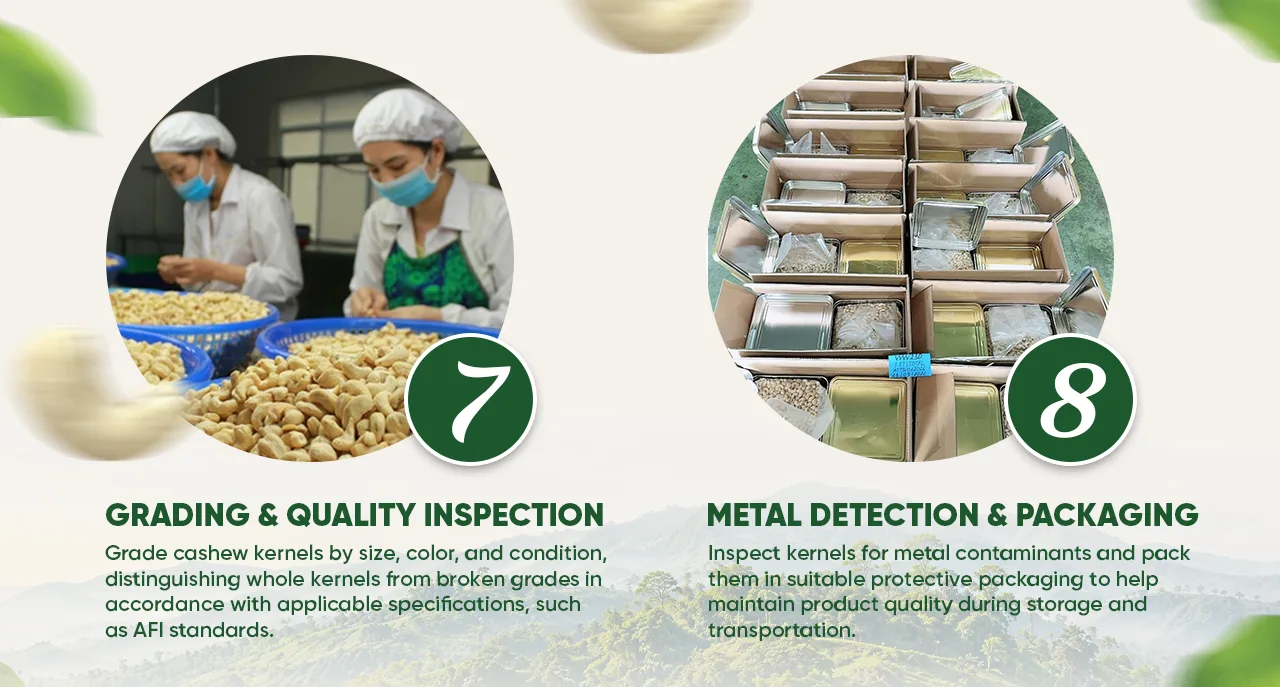
8. Metal Detection and Export Packaging
Before shipment, cashew kernels may pass through metal detection equipment as part of the factory’s foreign matter control procedures. After inspection, the kernels are packed in suitable materials to protect them from moisture and other external factors during storage and transportation. Depending on product specifications and storage requirements, packaging options may include vacuum-sealed bags or other protective packaging solutions. Details such as net weight, packaging format, lot codes, product labels, and labeling requirements should be confirmed before production begins. Certain markets or shipments may also require additional treatments. However, fumigation or other disinfection treatments should only be applied when necessary, based on product characteristics and applicable regulations, rather than being treated as a standard requirement for every cashew kernel shipment. Proper inspection and packaging help preserve product quality throughout storage, transportation, and distribution to international buyers.
Why Does the Processing Process Matter to Cashew Importers?
For cashew importers, product quality goes beyond the appearance of the finished kernels. It is influenced by every stage of processing, from the quality of raw cashew nuts and steam treatment to shelling, drying, peeling, and grading. Each step can affect the percentage of whole kernels, kernel size, and overall product consistency.
Different buyers also have different priorities depending on how they use or distribute the products. Food manufacturers typically prioritize consistent kernel sizes and quality to maintain uniformity across production batches. Retail distributors, on the other hand, tend to place greater emphasis on appearance, whole-kernel ratio, and packaging specifications.
When evaluating a cashew supplier, buyers should therefore look beyond product samples and consider the supplier’s technical specifications, quality control procedures, traceability systems, and compliance with food safety requirements in the target market. These factors help ensure that the delivered products match the agreed specifications and meet the buyer’s expectations.