Vietnam’s Processed Food Exports: From Supply Advantage to Market-Ready Products
Vietnam’s processed food sector is undergoing a clear transition, from exporting raw materials to delivering finished, market-ready products. Backed by a strong agricultural base, Vietnam has expanded its export presence to over 180 markets, with several product categories consistently generating more than USD 1 billion in annual export value.
Amid ongoing volatility in global logistics and supply chains, free trade agreements (FTAs) continue to play a critical role in market expansion, particularly across the Asia-Pacific, Oceania, and emerging markets in Africa. However, the basis of competitiveness is shifting. Cost advantage alone is no longer sufficient. Increasingly, it is the ability to meet stringent requirements on quality, traceability, and sustainability that defines long-term viability.
Shifting Market Expectations
Global consumption patterns are reshaping how processed food products are developed and positioned. Demand is increasingly driven by convenience, product variety, and alignment with specific market preferences.
At the same time, the rise of sustainable consumption and plant-based products is introducing new requirements for manufacturers. Each market also operates under distinct regulatory frameworks—from Halal certification in Muslim-majority countries to stringent quality control standards in markets like Japan. This requires producers not only to scale production but to maintain flexibility and consistency in meeting diverse and evolving requirements.
From Export Transactions to Structured Supply Systems
Bringing processed food products to international markets is no longer a transactional activity. It requires coordination across supply, product standards, and distribution systems.
In this context, many importers are increasingly working with partners that can operate at the source, reducing operational risk through structured supply chain management. These partners are involved in supplier selection, process standardization, and export control, helping ensure greater consistency and reliability.
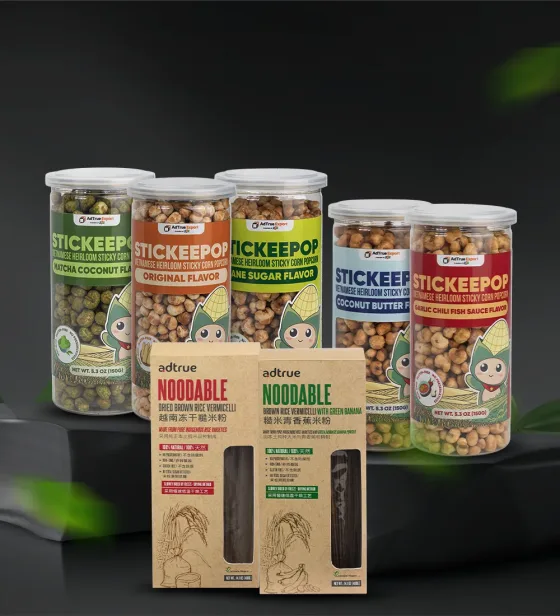
Within this model, FPT AdTrue Export focuses on aligning Vietnam’s processed food supply with international market requirements. Depending on the collaboration model, products can be developed under private labels or exported directly through FPT AdTrue Export. This approach enables importers to remain flexible in their commercial strategy while maintaining control over quality and compliance.
For importers, this translates into a sourcing system that is both stable and scalable, particularly in product categories such as snacks, confectionery, beverages, and ready-to-eat foods, where consistency and market adaptability are critical.